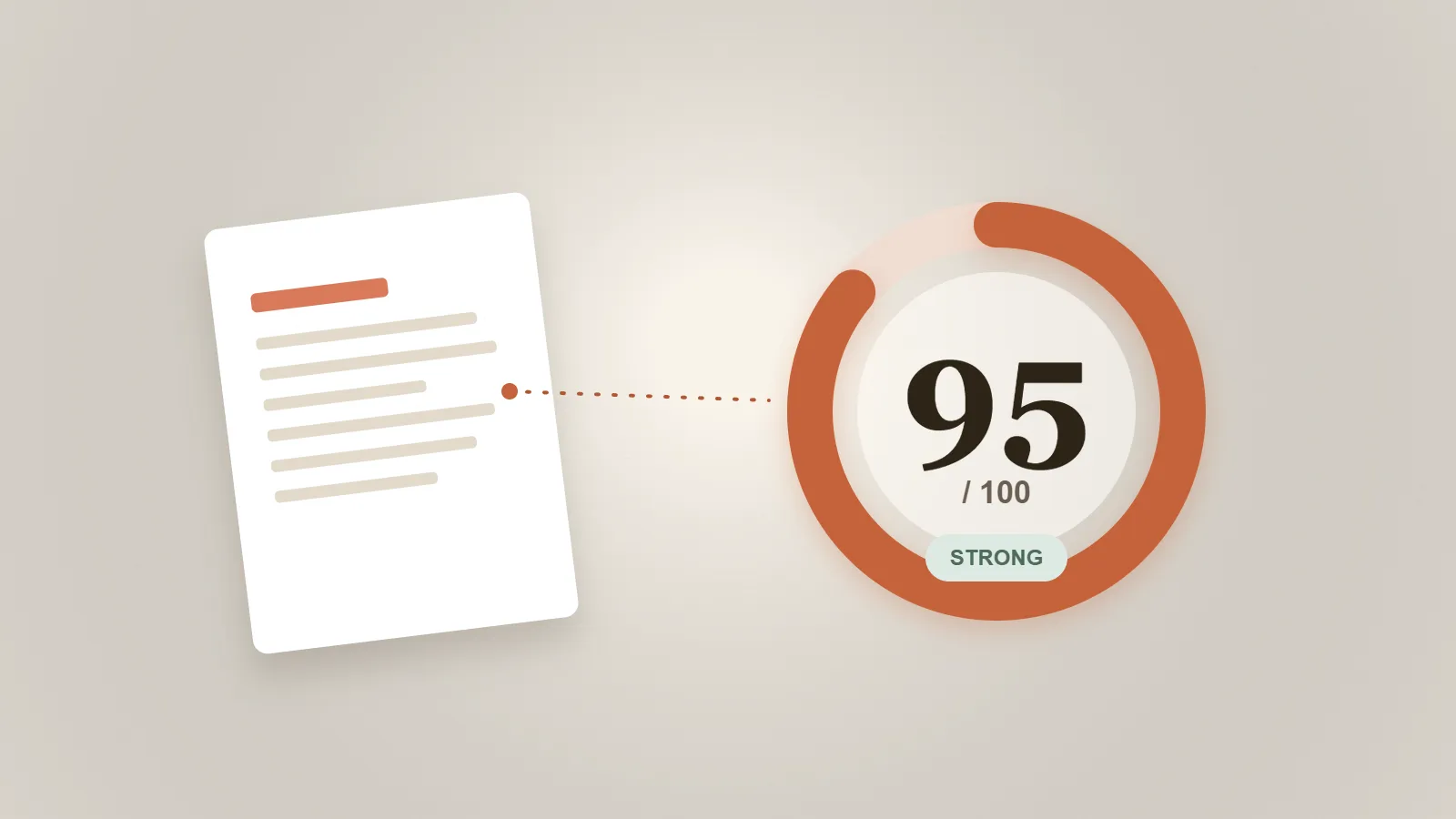
If you have run your CV through an online checker, you may have seen a number called a CV score or an ATS score. It can be a useful orientation, but it is easy to misread. This post explains what an ATS CV score usually represents and how to act on it.
What a CV score measures
Most CV scores are a readability and structure signal. They estimate how clearly your CV presents its information: whether the sections are easy to find, whether the formatting is clean, and whether the experience is described in a way that is easy to scan.
A score is a summary, not a verdict. It points you toward areas that may need attention so you can decide what to improve first.
What a CV score does not mean
A CV score is not a prediction that you will or will not get an interview. Different employers use different applicant tracking systems with different settings, and no third-party score can know how a specific employer will read your CV.
Treat a score as feedback on clarity, not as a guarantee about outcomes. A high score on a readability check still needs a strong, honest match to the role.
How a score is usually calculated
Readability-focused scores tend to look at things like a clean single-column layout, standard section headings, selectable text rather than images, and whether role-relevant wording appears where it makes sense. When you add a job description, some tools also look at how well your CV reflects that specific role.
Because the inputs are mostly about structure and clarity, the fastest way to move a score is usually to fix formatting and wording rather than to add keywords.
How to use your score
Start with the specific suggestions underneath the number. Fix the highest-priority items first — usually structure, then clarity, then role fit — and re-check after each round of edits.
You can run a free CV scanner to see your CV score and a list of practical fixes, then use the suggestions to guide your edits.
A realistic expectation
A good CV score means your CV is clear and easy to read, which is a sensible baseline before you apply. It is one helpful signal among several, alongside a truthful match to the role and a human review before you submit.